A length of 25 centimeters is exactly 9.84 inches. Many people search for how long is 25 cm to understand how this metric value translates to the imperial units commonly used in the United States. Whether you are measuring a household object, a piece of stationery, or a technical component, understanding the relationship between centimeters, inches, and meters is essential for precision.
MeasurementsOctober 25, 2026
How Long Is 25 cm? 9.84 Inches and Conversion Guide
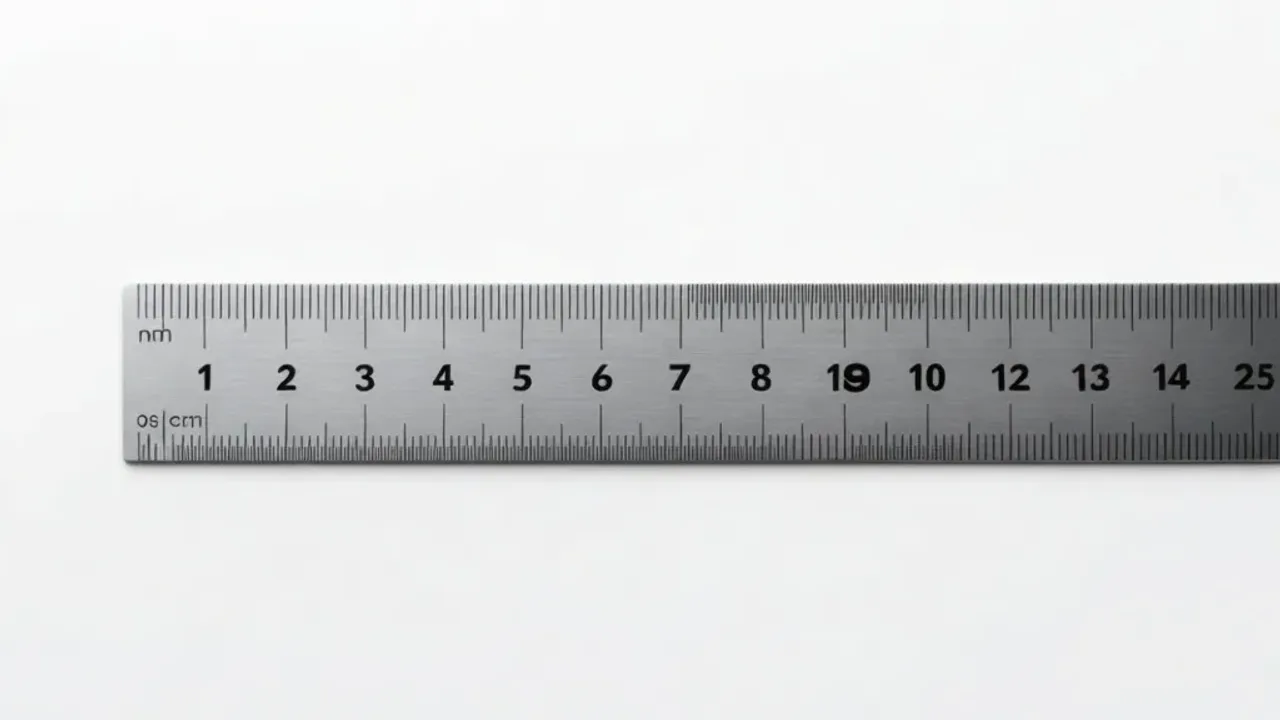 AI-generated image
Key Takeaways:
- 25 centimeters is exactly 9.84 inches long.
- The value represents one-quarter of a meter.
- Use a standard ruler or measuring tape to verify.
- This distance helps estimate the size of smaller items.
Metric System Standards
This measurement functions within the international metric system, which uses the meter as the base unit. Since one centimeter is defined as one-hundredth of a meter, simple division confirms that 25 centimeters equals one-quarter of a meter. The metric system is designed for simplicity, allowing for easy conversions by shifting decimal points or using standard multipliers. It is a globally recognized standard for scientific and daily measurements.
When someone asks how long is 25 cm, they are usually looking for a quick, reliable conversion to inches for practical reference. Because the United States primarily uses the imperial system, visualizing metric lengths can sometimes be challenging without a direct comparison. Understanding that 25 centimeters sits just under the 10-inch mark is a helpful mental shortcut for those who think in inches.
Keep these fundamental conversion factors in mind for your projects:
- 1 centimeter equals 10 millimeters.
- 100 centimeters equals 1 meter.
- 2.54 centimeters equals exactly 1 inch.
- 1,000 millimeters equals 1 meter.
Practical Applications and Comparisons
Understanding this specific length assists in various manual, technical, and creative tasks. Whether you are building furniture, adjusting a sewing pattern, or checking the dimensions of a new screen, knowing the exact metric equivalent prevents errors. The following table compares how 25 centimeters relates to other common units of measurement to provide a comprehensive overview.
| Unit | Equivalent Value |
|---|---|
| Millimeters | 250 mm |
| Inches | 9.84 in |
| Feet | 0.82 ft |
| Meters | 0.25 m |
| Yards | 0.27 yd |
When you are performing measurements for a project, follow these steps to ensure the highest level of accuracy:
- Select a high-quality, calibrated measuring tool.
- Ensure the device is clean and free of debris.
- Align the starting edge of the object with the zero mark on the ruler.
- Observe the end point where it aligns with the 25-centimeter graduation mark.
- Verify the result by checking the corresponding inch markings on the reverse side of the tool.
Precision is vital. Small errors in measurement can compound over larger projects, leading to issues with fit or alignment. Always double-check your reading to avoid unnecessary waste of materials.
Visualizing Metric Lengths
Visualizing 25 centimeters is easier when you relate it to common objects found in a typical office or home environment. For instance, the shorter side of a standard piece of letter-sized paper is 8.5 inches, while the longer side is 11 inches. Therefore, 25 centimeters is slightly longer than the width of a standard sheet of paper.
Electronic devices also provide excellent reference points. Many standard tablets have a screen diagonal that significantly exceeds 25 centimeters, but the width of a standard laptop screen is often close to this length. Having these mental anchors makes it much easier to estimate dimensions without reaching for a tool every time.
Common Conversion Challenges
One of the most frequent mistakes people make when converting units is confusing the decimal placement. Because there are 100 centimeters in a meter, some assume that 25 centimeters is 2.5 meters. This is incorrect. Always remember that 25 centimeters is always 0.25 meters. Writing down the conversion steps can help prevent these common mental slips during complex calculations.
Another point of confusion involves the difference between centimeters and millimeters. Since there are 10 millimeters in every centimeter, the conversion requires a simple multiplication by 10. For 25 centimeters, this results in 250 millimeters. This level of granularity is often required in engineering or precision manufacturing where even a fraction of a millimeter can change the outcome of the design.
Frequently Asked Questions
How many inches are in 25 centimeters?
There are exactly 9.84 inches in 25 centimeters. This is a standard conversion used globally for documentation and technical specifications.
Is 25 centimeters the same as 0.25 meters?
Yes, it is exactly 0.25 meters. A full meter contains 100 centimeters, so dividing 25 by 100 confirms this equivalent value.
How do I visualize 25 centimeters in real terms?
You can visualize it by comparing the length to the shorter side of a piece of letter paper. It is also very close to the width of a standard laptop screen, making it a common dimension in consumer electronics.
What is the easiest way to convert to millimeters?
To convert from centimeters to millimeters, simply multiply the value by 10. Therefore, 25 centimeters equals 250 millimeters.
Why do people ask how long is 25 cm?
Users often ask this to verify dimensions for household items, furniture, or technical components. Accurate conversion ensures that objects will fit correctly within a specific space or assembly.
Does the conversion change based on the material being measured?
No, the mathematical conversion between centimeters, inches, and meters remains constant regardless of the material. Whether you are measuring water, wood, or metal, the unit relationship is fixed by international standards.
In summary, 25 centimeters equals 9.84 inches or 0.25 meters. Always use a reliable tool for precision and verify your calculations to ensure success in your projects.
Share: