When you are looking for the answer to 30 fahrenheit to celsius, the precise result is -1.11 degrees Celsius. Understanding how to navigate between these two temperature scales is a fundamental skill for anyone dealing with international weather reports, scientific data, or climate-controlled environments. While the United States relies heavily on the Fahrenheit scale, much of the rest of the world uses Celsius, making conversion a necessary part of daily life.
ConvertersNovember 20, 2026
30 Fahrenheit to Celsius: What Is -1.11 Degrees Celsius?
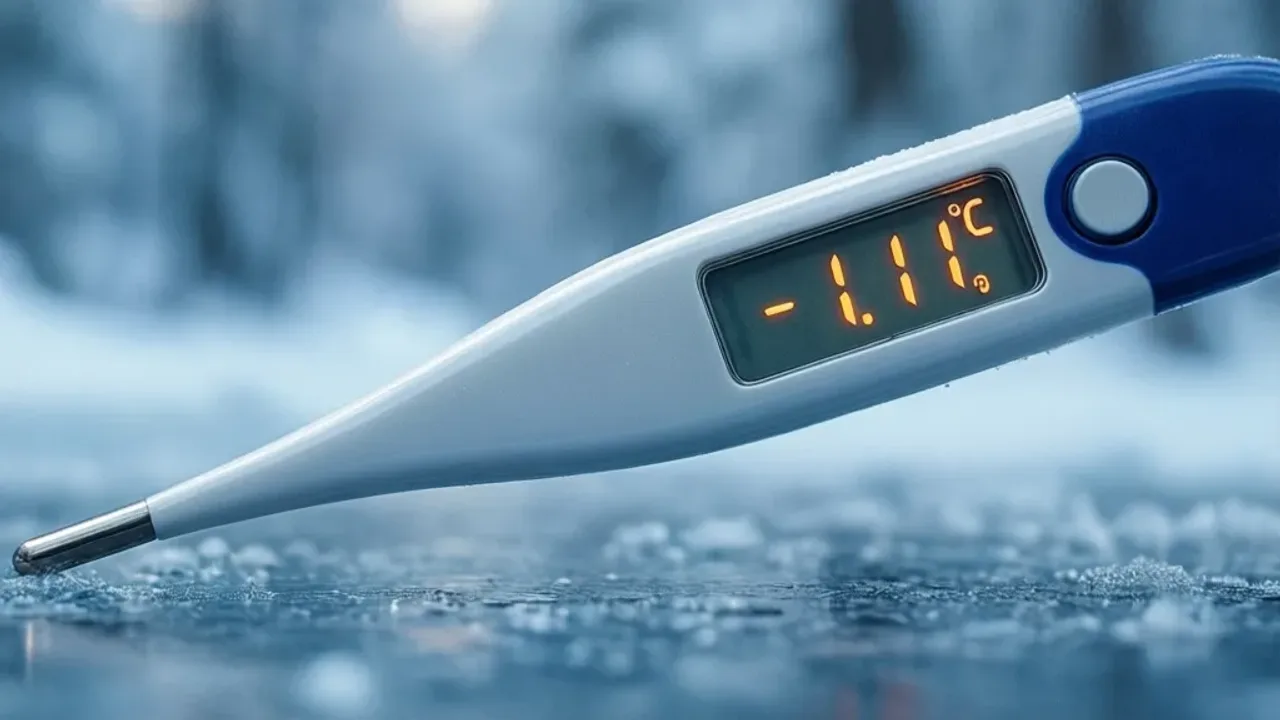 AI-generated image
Key Takeaways:
- The conversion of 30 fahrenheit to celsius results in exactly -1.11 degrees Celsius.
- The standard calculation requires subtracting 32 from the Fahrenheit value before multiplying by 5/9.
- Always verify your unit settings before performing calculations for scientific or weather-related tasks.
- The freezing point of water serves as the universal anchor for comparing these two temperature systems.
The Mathematical Conversion Process
To accurately determine the value of 30 fahrenheit to celsius, one must utilize the standard linear equation. The process involves taking your Fahrenheit temperature, subtracting 32, and then multiplying that total by the fraction 5/9. This specific adjustment is essential because the two scales are calibrated differently. While 32 degrees Fahrenheit represents the point at which water begins to freeze, that same physical state is defined as 0 degrees on the Celsius scale.
To ensure your manual calculations remain consistent and accurate, follow these structured steps:
- Begin by identifying the specific Fahrenheit reading you need to convert.
- Subtract 32 from that initial value to find the variance from the freezing point.
- Multiply the resulting figure by 0.5556, which is the decimal equivalent of 5/9, to translate the magnitude into the Celsius scale.
| Fahrenheit (°F) | Celsius (°C) | Thermal State |
|---|---|---|
| 28 °F | -2.22 °C | Below Freezing |
| 29 °F | -1.67 °C | Below Freezing |
| 30 °F | -1.11 °C | Below Freezing |
| 31 °F | -0.56 °C | Below Freezing |
| 32 °F | 0.00 °C | Freezing Point |
Practical Applications and Context
Mastering this conversion is vital for professionals and individuals who frequently monitor environmental conditions. Whether you are adjusting industrial climate control systems or interpreting international weather reports, the ability to convert temperatures ensures that data is understood correctly. Maintaining accuracy in these calculations prevents errors that could occur when equipment or documentation uses mixed units of measurement. Precision is key. It helps avoid confusion in thermal management.
When performing these conversions, consider these tips to maintain data integrity:
- Ensure your calculator is set to standard arithmetic mode.
- Round your final answer to two decimal places for general reporting.
- Use a reference table for quick checks during repetitive tasks.
- Double-check your subtraction before applying the multiplication factor.
Frequently Asked Questions
How do I convert Fahrenheit to Celsius manually?
To convert manually, subtract 32 from the Fahrenheit temperature and multiply the result by 5/9. This simple arithmetic operation provides the exact Celsius equivalent needed for your records.
Is 30 degrees Fahrenheit considered freezing?
Yes, 30 degrees Fahrenheit is below the freezing point of water, which is defined as 32 degrees Fahrenheit or 0 degrees Celsius. In this environment, water will typically transition into a solid ice state.
Why is the Fahrenheit scale still used?
The Fahrenheit scale remains the standard for daily life in the United States, providing a convenient range for air temperature. Most individuals find the 0 to 100 scale intuitive for describing weather conditions, where 0 is notably cold and 100 is quite hot.
Does the conversion formula change at different temperatures?
No, the formula (F - 32) * 5/9 is a linear equation that applies universally. It remains accurate whether you are calculating sub-zero temperatures or points well above the boiling threshold of water.
What is the easiest way to estimate the conversion?
For a quick mental estimate, subtract 30 from the Fahrenheit temperature and divide the result by 2. This rough approximation is useful for casual situations, though it lacks the precision of the exact -1.11 degree calculation.
Always remember to subtract 32 and multiply by 5/9 to reach the correct Celsius value. This simple method ensures that you can accurately interpret temperatures regardless of the scale used.
Share: