5 kilograms is equal to 11.0231 pounds. When you need to determine the weight of an object in the imperial system after starting with a metric measurement, understanding this specific conversion is essential. Whether you are dealing with shipping logistics, health metrics, or simple culinary measurements, knowing how to translate 5 kg to lbs accurately ensures that you maintain precision in all your activities.
ConvertersNovember 16, 2026
5 kg to lbs: How Much is 5 Kilograms in Pounds?
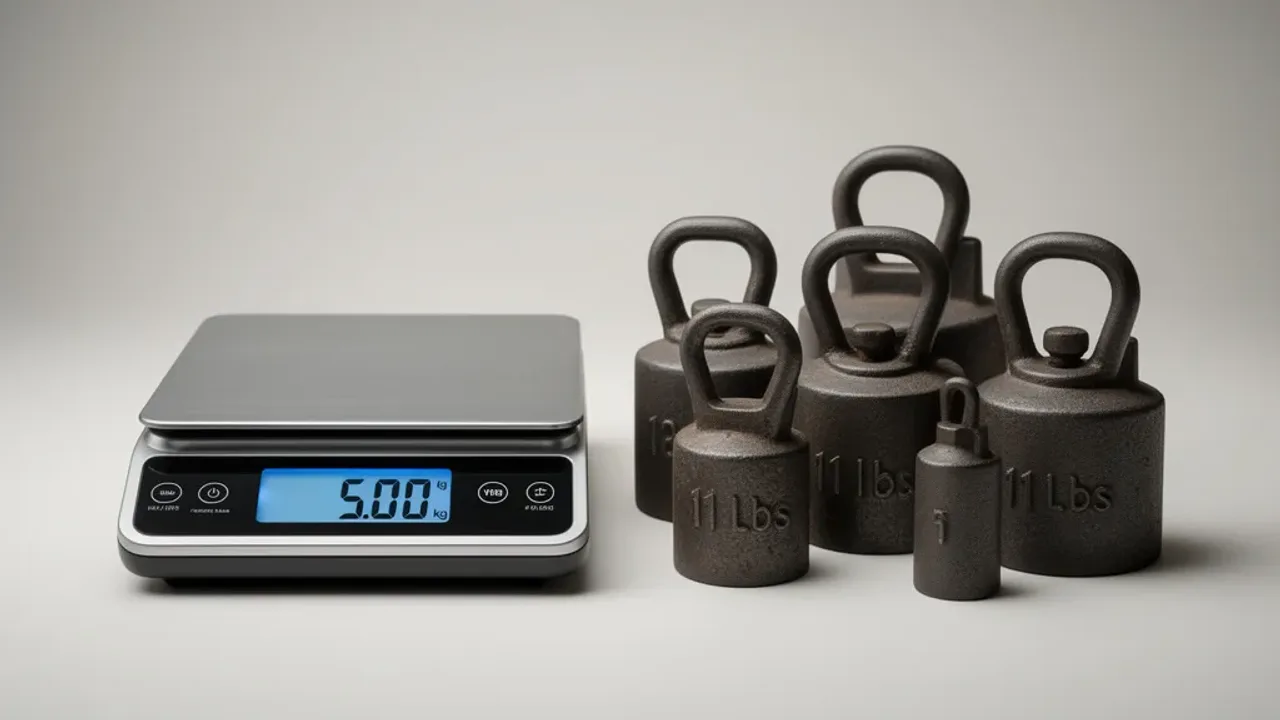 AI-generated image
Key Takeaways:
- The conversion of 5 kg to lbs results in 11.0231 pounds.
- The official conversion factor used for this calculation is 2.20462.
- Always verify the level of precision required for your specific measurement task.
- Using a multiplier of 2.2 provides a reliable estimate for daily life.
Conversion Formula and Methodology
To convert kilograms to pounds, you must multiply the mass value by the conversion factor of approximately 2.20462. Because one kilogram is defined as equivalent to 2.20462 pounds, the calculation for 5 kilograms is straightforward: you multiply 5 by this constant. This mathematical process ensures that your measurements remain consistent when you must switch between the metric system and the imperial system of measurement.
The kilogram is the base unit of mass in the International System of Units. In contrast, the pound serves as a primary unit of mass in the United States and several other regions. When you search for 5 kg to lbs, you are essentially seeking to bridge the gap between these two distinct systems. Applying the fixed factor of 2.20462 allows you to translate any metric weight into its imperial counterpart with high reliability.
| Kilograms (kg) | Pounds (lbs) |
|---|---|
| 1 kg | 2.2046 lbs |
| 2 kg | 4.4092 lbs |
| 3 kg | 6.6139 lbs |
| 4 kg | 8.8185 lbs |
| 5 kg | 11.0231 lbs |
Practical Applications and Tips
Understanding this conversion is vital for accurate weight management and international shipping. Follow these steps to ensure your results remain accurate:
- Identify whether you need an exact conversion or a rounded estimate for your task.
- Apply the 2.20462 multiplier if you are performing technical or scientific calculations.
- Use the factor of 2.2 for quick mental math when you are shopping or traveling.
- Verify the settings on your scale to confirm whether the output is set to metric or imperial units.
Keep these additional points in mind when handling weight conversions:
- Check if your digital device requires manual conversion or if it features a toggle switch for units.
- Remember that rounding to two decimal places is standard for most consumer goods.
- Ensure the decimal point is placed correctly to avoid significant errors in your final count.
Effective conversion is a highly practical skill. When you need to determine the weight for logistics, use the standard factor. Precision prevents costly errors.
Frequently Asked Questions
Is the conversion factor always the same?
Yes. The relationship between the kilogram and the pound is fixed by international standards. Using the factor of 2.20462 ensures your results remain consistent across all calculations.
Why do results sometimes show slightly different values?
Differences usually stem from rounding during the calculation. While 11.02 pounds is the standard figure for 5 kilograms, scientific work may require more precision.
How can I calculate this quickly?
For a fast estimate, multiply the weight by 2.2. For exact needs, use a calculator with the 2.20462 multiplier.
Are specialized tools required?
No. A basic calculator or a conversion chart works well. Most modern digital scales also allow users to switch units with a single button press.
Is 5 kg considered a heavy load?
The perception of load depends on the context, such as luggage limits. Regardless, 5 kilograms equals 11.0231 pounds in every situation.
Multiply by 2.20462 to achieve the most accurate result. Rounding to two decimal places is sufficient for almost all everyday needs.
Share: