Five degrees Fahrenheit is equal to -15 degrees Celsius. When an individual searches for 5 fahrenheit to celsius, they are seeking a precise mathematical conversion between these two standard temperature scales. Understanding how these measurements relate to one another is essential for interpreting weather reports, scientific data, and cooking instructions accurately across different regions.
ConvertersOctober 28, 2026
5 Fahrenheit to Celsius: It Equals -15 Degrees Celsius
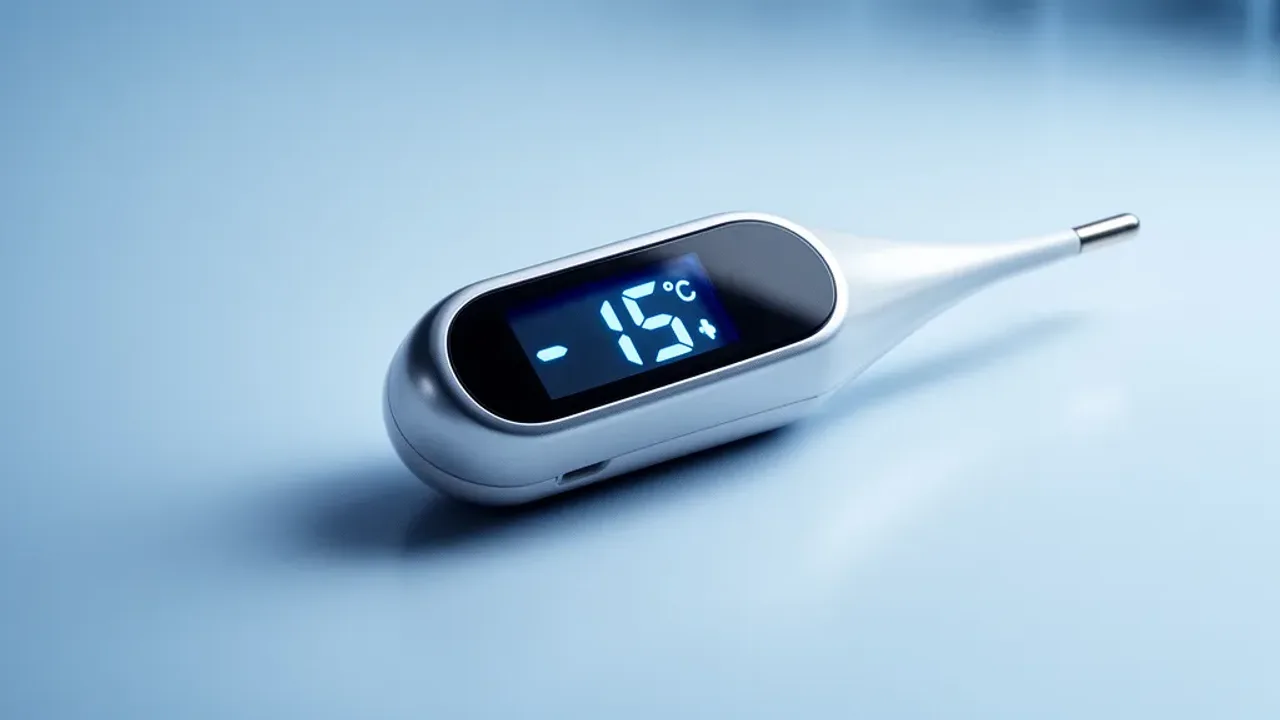 AI-generated image
Key Takeaways:
- Five degrees Fahrenheit converts exactly to -15 degrees Celsius.
- The conversion process relies on a standard mathematical formula involving subtraction and multiplication.
- Mental estimation is a helpful shortcut for quick daily needs.
- Consistency in the formula ensures accurate results across all temperature ranges.
Mathematical Calculation
To convert a temperature from Fahrenheit to Celsius, one must subtract 32 from the Fahrenheit value and then multiply the result by 5/9. Applying this formula when calculating 5 fahrenheit to celsius results in 5 minus 32, which equals -27. Multiplying -27 by 5/9 yields -15 degrees Celsius. This standard conversion method ensures accuracy when shifting between these two temperature scales. It is a reliable process that remains the same regardless of the initial number.
Keep these specific points in mind when performing your own temperature conversions:
- Always perform the subtraction of 32 before multiplying by the fraction.
- The 5/9 ratio is a constant value for all Fahrenheit to Celsius conversions.
- Negative results are common when converting low Fahrenheit values, such as 5 degrees.
- Double-check your math if you are working with extreme temperature ranges.
| Fahrenheit (°F) | Celsius (°C) |
|---|---|
| 5 °F | -15 °C |
| 32 °F | 0 °C |
| 50 °F | 10 °C |
| 68 °F | 20 °C |
| 86 °F | 30 °C |
Practical Applications
Understanding the conversion between Fahrenheit and Celsius is highly useful for interpreting international weather reports, specific cooking instructions, and global scientific data. Follow these logical steps to ensure your conversion remains accurate every time you perform it:
- Identify the starting temperature in Fahrenheit.
- Subtract 32 from that specific number.
- Multiply the remaining value by 5.
- Divide that product by 9 to get the final Celsius reading.
It is a straightforward process once mastered. Many people find that practicing with common numbers helps improve their speed.
Frequently Asked Questions
Is the conversion formula always the same?
Yes, the mathematical formula for converting Fahrenheit to Celsius remains consistent regardless of the temperature value. By applying the standard calculation, users can accurately convert any Fahrenheit reading to Celsius without needing specialized software.
Why do different regions use different scales?
The use of temperature scales is primarily a matter of regional standardization and historical convention. While many areas utilize the Celsius scale for scientific and daily measurements, others continue to use the Fahrenheit scale as a standard practice in their daily lives.
How can I perform this calculation quickly?
For a quick mental estimate, subtract 30 from the Fahrenheit temperature and divide the result by 2. This provides a functional approximation for general use, though it is less precise than the exact 5/9 calculation.
Does the formula work for negative temperatures?
The formula functions correctly for all temperature values, including those significantly below zero. Following the standard order of operations ensures the sign of the result is mathematically correct in every instance.
What is the freezing point of water in these scales?
Water freezes at 32 degrees Fahrenheit, which corresponds exactly to 0 degrees Celsius. This fixed point serves as a primary reference for calibrating both temperature scales globally.
The simple conversion of 5 fahrenheit to celsius results in -15 degrees Celsius. Always remember to subtract 32 before applying the 5/9 multiplier to maintain precision in your calculations.
Share: