Sixty meters is a distance equivalent to 196.85 feet. Understanding exactly how long is 60 meters allows for greater precision in various professional, athletic, and construction applications. Whether you are a student, an engineer, or an athlete, grasping this metric length is essential for accurate spatial planning and performance evaluation.
MeasurementsNovember 5, 2026
How Long Is 60 Meters? Conversion to Feet and Yards Explained
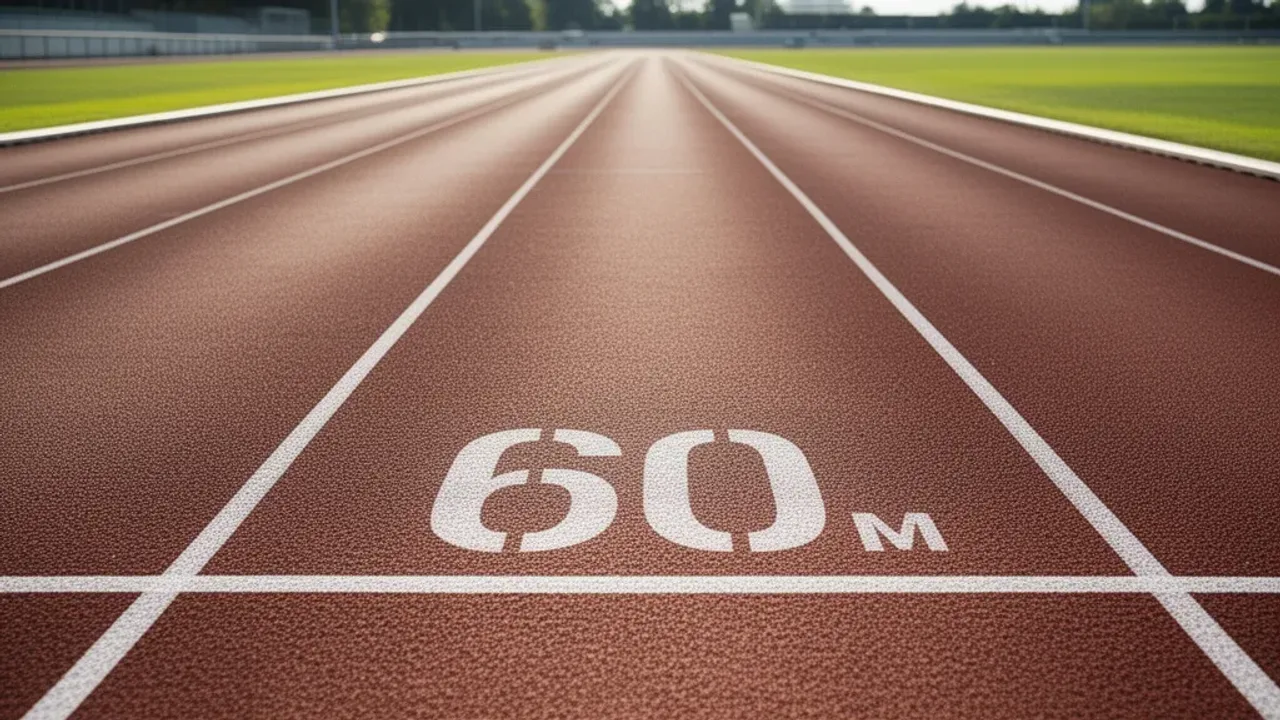 AI-generated image
Key Takeaways:
- A distance of 60 meters equals approximately 196.85 feet or 65.62 yards.
- The meter is defined globally by the distance that light travels in a vacuum.
- Indoor track events frequently utilize this distance for competitive sprint races.
- Precision ensures safety and structural integrity in engineering and construction.
The Scientific Definition of the Meter
The meter serves as the fundamental unit of length within the International System of Units (SI). It is not merely a random choice of length; it is deeply rooted in the physics of our universe. Scientists define the meter by the distance that light travels in a vacuum during a specific time interval. This standard ensures that whether you are in a laboratory or a construction site, your measurements remain consistent.
Consistency is vital. Without a stable definition, global trade and scientific research would face significant discrepancies. When someone asks how long is 60 meters, they are essentially asking for a specific fraction of the distance light traverses in a fraction of a second. This rigorous definition allows for the high level of accuracy required in modern manufacturing and architecture.
Consider these factors when working with metric distances:
- Verify the required precision level for your specific project or task.
- Use reliable, calibrated conversion tools to maintain accuracy between metric and imperial systems.
- Ensure that your measurement tools are checked regularly to prevent drift or errors.
Conversion and Measurement Table
Converting metric units to imperial units is a common requirement for projects that span international standards. Below is a detailed breakdown of how 60 meters translates into various common units of measurement to help you visualize the distance more effectively.
| Unit | Measurement for 60 Meters |
|---|---|
| Feet | 196.85 ft |
| Yards | 65.62 yd |
| Inches | 2,362.20 in |
| Centimeters | 6,000 cm |
| Millimeters | 60,000 mm |
Practical Applications in Athletics and Construction
The distance of 60 meters is highly significant in the world of competitive sports. Specifically, indoor track and field facilities are often limited by the size of the building, making a full 100-meter sprint track difficult to construct. Consequently, 60 meters has become the standard sprint distance for indoor championships. Athletes train specifically for this explosive distance, focusing on the acceleration phase and maintenance of top speed over a shorter span.
Beyond the track, the 60-meter distance is a common benchmark in civil engineering and urban planning. It often represents the length of a small building plot, the span of a minor bridge, or the required safety clearance for certain industrial equipment. Professionals must be able to translate these dimensions quickly to ensure that all structural components fit within the intended boundaries.
Follow these steps to ensure accuracy when measuring a 60-meter span:
- Clear the path of all debris to ensure a straight and unobstructed measurement line.
- Use a high-quality laser distance measurer for optimal results over longer spans.
- If using a physical tape, ensure it is pulled taut and kept level to avoid sagging, which can add inaccurate inches to the total.
- Always verify the measurement from both directions to confirm the consistency of your results.
Why Understanding Metric Length Matters
In a world where different regions use different measurement systems, the ability to convert between them is a valuable skill. The metric system is favored in science because it is base-10, making calculations significantly simpler than those involving the imperial system. However, in many countries, imperial units remain the standard for daily life. Knowing how to bridge this gap is essential for clear communication.
When you understand the scale of 60 meters, you can better visualize distances in your environment. For instance, thinking of it as roughly 197 feet helps you compare it to the length of a football field or the height of a tall building. This mental mapping is a powerful tool for anyone involved in design or project management.
Frequently Asked Questions
How many yards are in 60 meters?
There are exactly 65.62 yards in 60 meters. This conversion is particularly useful for individuals working with imperial standards in landscaping or general construction.
Is 60 meters considered a long distance?
The perception of length is relative to the task at hand. It is a short distance for a vehicle traveling at high speeds, yet it is a significant, high-intensity distance for an athlete sprinting on an indoor track.
What is the primary use in professional sports?
It is the standard distance for indoor sprint competitions. It allows athletes to demonstrate their explosive power and acceleration in a controlled, indoor environment.
How does 60 meters compare to 200 feet?
Sixty meters is slightly shorter than 200 feet, measuring 196.85 feet. The difference of roughly 3.15 feet is significant in precision-based tasks like architecture or track lane construction.
Why is the meter a global standard?
The meter provides a uniform language for science, trade, and engineering. Consistency across borders is vital for global cooperation. This clarity is exactly why someone asks how long is 60 meters in a scientific or professional context.
Sixty meters equals 196.85 feet, serving as a vital benchmark for various technical, athletic, and logistical tasks. Always use calibrated equipment to maintain your accuracy. Precision is the key to success.
Share: