Five centimeters is a length equal to 50 millimeters or 0.05 meters. Many people frequently search to understand how big is 5 cm to ensure accuracy in their daily tasks. It is a simple measurement that often appears in both technical and casual settings. Understanding this length is essential for anyone working with metric units, whether for school projects, home repairs, or precision crafting.
MeasurementsNovember 1, 2026
How Big Is 5 cm? 50 Millimeters Explained and Visualized
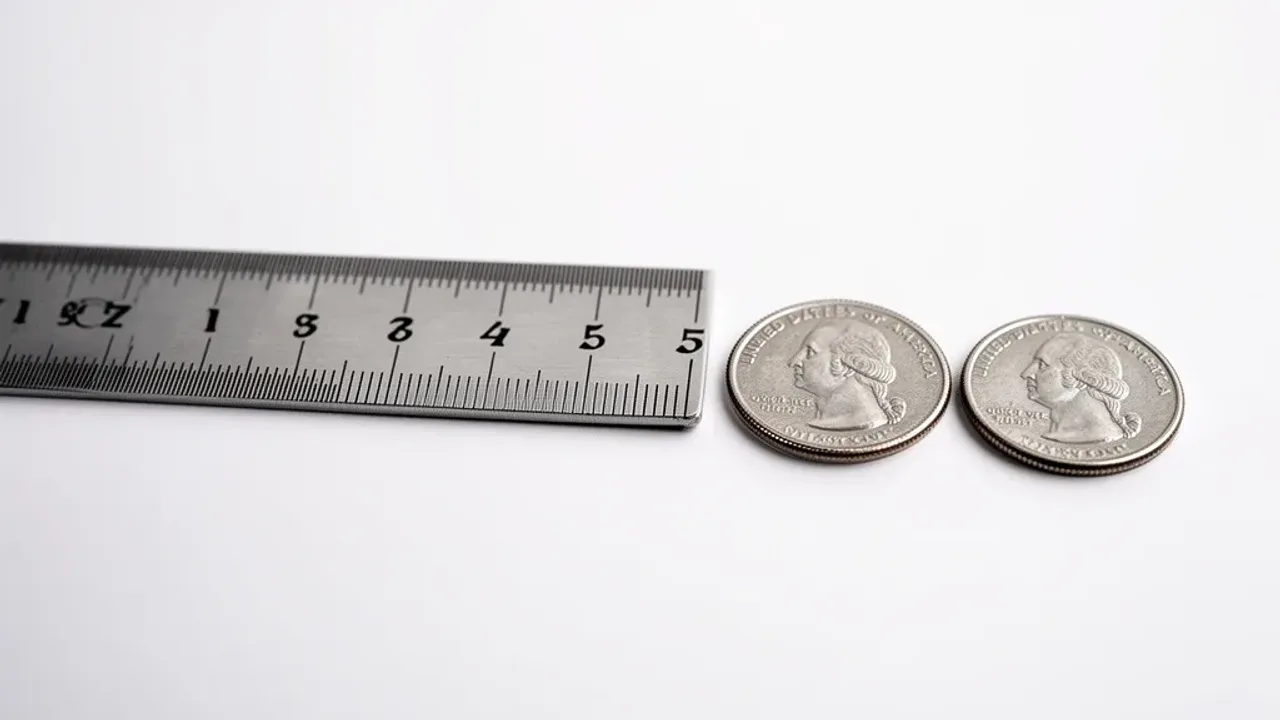 AI-generated image
Key Takeaways:
- Five centimeters measures exactly 50 millimeters.
- This length is approximately 1.97 inches.
- Two quarters side-by-side provide a physical reference.
- It is a standard unit in precision work.
| Measurement Unit | Value for 5 cm |
|---|---|
| Millimeters | 50 mm |
| Meters | 0.05 m |
| Inches | 1.97 in |
| Centimeters | 5 cm |
Visualizing 5 Centimeters
Understanding this scale is straightforward with common objects. Because 5 centimeters is a small distance, it serves as a benchmark for technical tasks. When you look at how big is 5 cm, you will find it is a compact size. It fits easily in your hand. Visualizing small distances can be difficult without a reference point. Most people struggle to estimate exact lengths without tools. This is where physical benchmarks become helpful. By using everyday items, you can quickly verify a measurement.
Consider the size of common stationery or currency. A standard ruler is the most accurate tool, but it is not always available. When you need to estimate 5 centimeters, look for objects that match this length. It is a reliable method. Many people use coins or small household items to bridge the gap between abstract numbers and physical reality. This technique is common in DIY projects and tailoring.
- Use a ruler for exact verification.
- Place two quarters side-by-side physically.
- Calibrate tools for high accuracy.
- Practice measuring common objects.
Practical Applications
This length is used in fields like tailoring or small-scale prototyping. It is also a fundamental unit in educational settings. It helps explain the metric system. It is very useful. Precision is important when working with small parts. Whether you are building a model or sewing a garment, knowing the exact scale is vital. The metric system provides a clear, decimal-based framework for these measurements.
In the world of manufacturing, 5 centimeters often represents a standard interval. Components are frequently designed with this dimension in mind. It balances size and utility. Small-scale manufacturing requires strict adherence to these measurements to ensure parts fit together correctly. A deviation of even a few millimeters can cause significant problems. This is why standardizing measurements is a core practice in engineering.
- Small-scale manufacturing components.
- Tailoring and garment adjustments.
- Educational math and science projects.
- General household measurement tasks.
- Prototyping new designs.
The Metric System Context
The metric system is built on powers of ten. This makes conversions between units simple and logical. One meter contains one hundred centimeters. Therefore, 5 centimeters is exactly one-twentieth of a meter. This relationship is taught globally to provide a consistent way of measuring the world. It is the gold standard for science and international trade. Understanding how these units relate helps in converting values quickly.
When you move from centimeters to millimeters, you multiply by ten. Thus, 5 centimeters becomes 50 millimeters. This level of granularity is perfect for items that are too small for meters but too large for micrometers. It provides the right amount of detail for most human-scale activities. If you are ever confused, remember that the prefix "centi-" implies one-hundredth, while "milli-" implies one-thousandth. This linguistic clue simplifies the math significantly.
Tools for Precise Measurement
To measure 5 centimeters accurately, you need the right equipment. A steel ruler is often the best choice for manual tasks. It provides a rigid edge that does not bend, ensuring the measurement remains straight. Digital calipers are another excellent option. They offer high precision and can display measurements in both millimeters and inches simultaneously. For those in creative fields, a flexible measuring tape is indispensable.
Maintaining your tools is just as important as choosing the right one. Keep rulers clean and free of debris. If using a digital tool, check the battery levels and ensure the sensors are calibrated correctly. A tool that is not calibrated can lead to errors that compound over time. Even a small error in the beginning can result in a significant mistake by the end of a project. Always verify your tools against a known standard.
Frequently Asked Questions
How many inches is 5 cm?
Five centimeters is approximately 1.97 inches. This conversion helps when using imperial tools.
Is 5 cm the same as 0.5 meters?
No, 5 centimeters equals 0.05 meters. A measurement of 0.5 meters is much longer.
What is the easiest way to estimate 5 cm?
Place two United States quarters side-by-side. This arrangement offers a quick visual guide.
Why is 5 cm a common measurement?
It is a standard increment in the metric system. It is ideal for precision work.
Does 5 cm always equal 50 millimeters?
Yes, 5 centimeters is defined as 50 millimeters. This is a constant in metric measurements.
Can I use a phone app to measure 5 cm?
Yes, several augmented reality apps can measure objects. However, they may not be as accurate as a physical ruler.
When determining how big is 5 cm, remember that it equals exactly 50 millimeters. Using two coins is the most efficient way to visualize this length.
Share: