Twelve meters is equivalent to a length of 39.37 feet. Many individuals often search for how long is 12 meters to better understand this distance in different unit systems. This dimension is a common standard in many professional fields. It is essential.
MeasurementsSeptember 21, 2026
How Long Is 12 Meters? The Exact Conversion to Feet and Yards
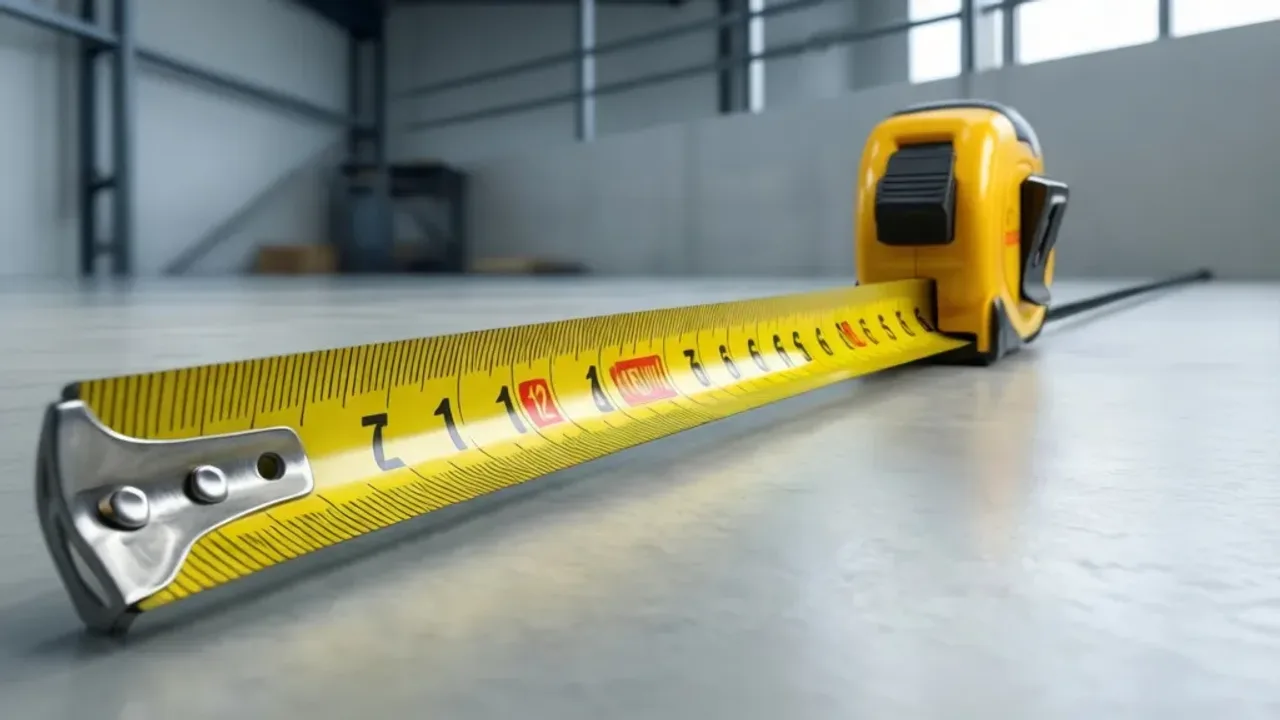 AI-generated image
Key Takeaways:
- Twelve meters equals approximately 39.37 feet or 13.12 yards.
- The meter is the base unit of length in the International System of Units.
- Precision depends on your tools.
- This distance serves as a reference for large objects.
Metric and Imperial Comparisons
Understanding how 12 meters translates into other units helps in construction. The table below provides the exact conversions for common unit systems. It is simple.
| Unit | Equivalent Value for 12 Meters |
|---|---|
| Feet | 39.37 ft |
| Yards | 13.12 yd |
| Inches | 472.44 in |
| Centimeters | 1,200 cm |
Standard Measurements
The meter is defined by international standards as the fundamental unit of length. Converting this to imperial units requires multiplying by the standard factor of 3.28084. Professionals who ask how long is 12 meters rely on these constants. Accuracy matters.
To ensure precision during measurement, follow these steps:
- Verify your tool's calibration.
- Identify the starting point.
- Pull the tape taut.
- Mark the endpoint clearly.
Practical Applications in Construction
Twelve meters is a common length for structural and logistical purposes in modern building projects. When working with this dimension, consider these factors:
- Check for physical obstacles.
- Use lasers for better precision.
- Account for material expansion.
In the construction industry, this distance is frequently used for framing, piping, and landscaping layouts. Because it is a clean, round number in the metric system, it simplifies the math for engineers. However, when working in regions that primarily use the imperial system, the conversion to 39.37 feet requires careful attention to detail. Small errors in measurement can lead to significant issues during the assembly of large-scale components. Using a high-quality tape measure is necessary to maintain consistency across the site.
Understanding the International System of Units
The meter is the foundational unit for length in the International System of Units (SI). It is defined by the distance light travels in a vacuum over a specific fraction of a second. This scientific definition ensures that 12 meters is a universal constant. It is not subject to regional interpretation. This uniformity allows global teams to collaborate on architectural and engineering designs without confusion. Whether you are in a laboratory or on a construction site, 12 meters remains exactly the same distance.
Tools for Measuring Long Distances
Measuring a length of 12 meters requires the right equipment. A standard 5-meter pocket tape is insufficient for a single-pass measurement. Instead, professionals often utilize 15-meter or 30-meter open-reel steel tapes. These tools are designed to handle longer spans with minimal sagging. For maximum efficiency, laser distance measurers have become the industry favorite. They provide instantaneous readings accurate to the millimeter. Using a laser is faster. It is safer.
Environmental Factors and Accuracy
When measuring 12 meters, environmental conditions can influence the outcome. Steel tapes, for instance, are susceptible to thermal expansion. On a very hot day, the metal may stretch slightly, altering the reading by a fraction of a millimeter. While this may seem negligible for general purposes, it is critical in high-precision engineering. Additionally, wind can cause a long tape to bow, leading to an inaccurate measurement. Always pull the tape taut to ensure a straight line. If you are working on a windy day, consider using a laser measure to avoid these external disturbances.
Frequently Asked Questions
How many yards are in 12 meters?
There are 13.12 yards in 12 meters. This conversion helps when planning outdoor spaces or marking sports fields.
Is 12 meters longer than 40 feet?
No, 12 meters is slightly shorter than 40 feet. It is 39.37 feet in total.
What is the best way to measure 12 meters?
Use a professional measuring tape or a laser tool. These methods minimize human error.
Why is the meter a standard unit?
It serves as the base unit in the International System of Units. It provides a consistent, global scale for all scientific work.
How can I visualize 12 meters?
Think of a large school bus. It is a helpful reference, which is why users ask how long is 12 meters. It is approximately 12 meters long.
Final Considerations for Large Projects
When executing projects that require significant lengths, documentation is key. Always record your measurements in both metric and imperial units if you are working with diverse teams. This practice reduces the risk of communication errors. Furthermore, double-checking the calibration of your tools before starting a project is a best practice. A small error multiplied over 12 meters can cause significant alignment problems in the final construction phase. Always measure twice and cut once. This classic advice remains the most effective way to save time and material costs.
Twelve meters is exactly 39.37 feet, falling just short of a 40-foot span. Always use a calibrated tool to ensure accuracy.
Share: