The primary difference between these terms is that a desert is a dry, barren geographical environment, whereas a dessert is a sweet food item served following a meal. Mastering the distinction of desert vs dessert ensures accuracy in your writing. It is quite simple.
SpellingAugust 23, 2026
Desert vs. Dessert: How to Tell the Difference and Remember
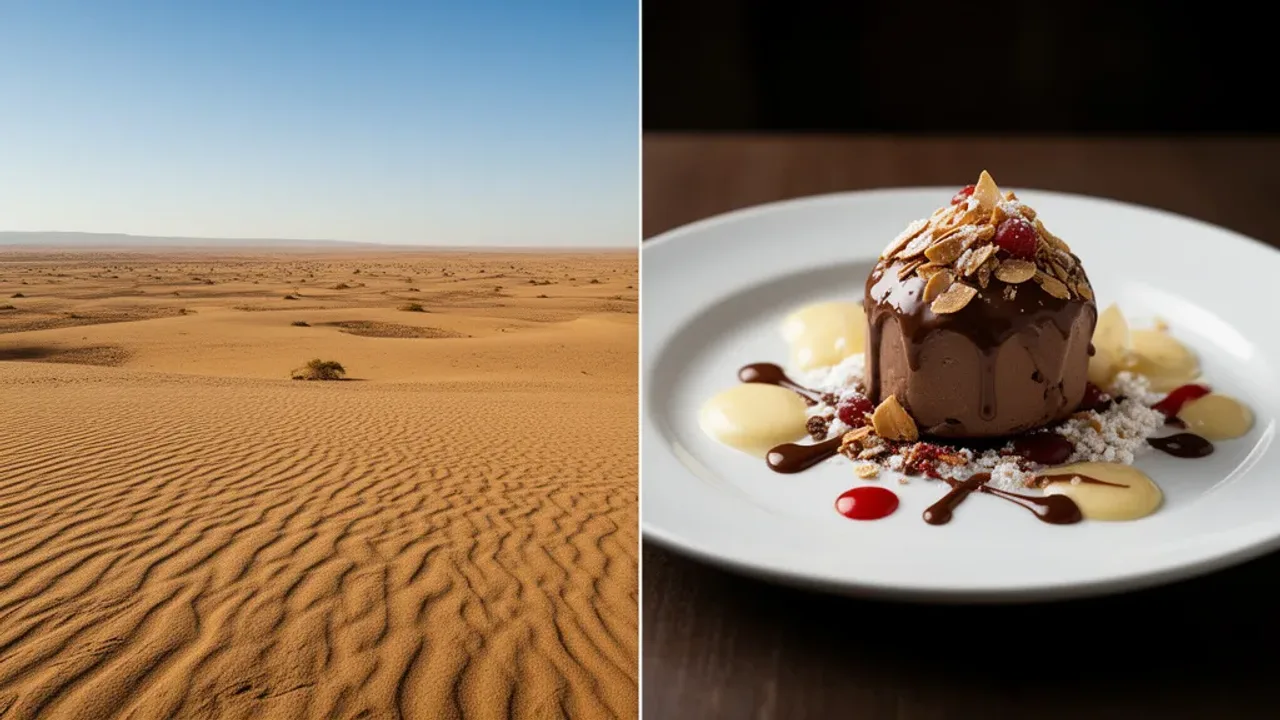 AI-generated image
Key Takeaways:
- Desert refers to a desolate, arid region.
- Dessert refers to a sweet course.
- The word dessert contains a double "s".
- Desert can function as a verb.
| Feature | Desert | Dessert |
|---|---|---|
| Primary Definition | Arid, barren land | Sweet meal course |
| Spelling | One "s" | Two "s"s |
| Stress Pattern | First syllable | Second syllable |
| Part of Speech | Noun or Verb | Noun |
Understanding the Meaning of Desert
A desert is a region that receives very little precipitation, making it difficult for plants and animals to thrive. These landscapes are often characterized by vast expanses of sand, rock, or ice. When you think of a desert, imagine a place that is dry and isolated.
However, the word has another meaning. As a verb, to desert means to leave a person or a post without permission. It implies an act of abandonment. This usage is common in legal or military contexts. It is a serious word. If you find yourself needing to describe an arid environment or the act of someone leaving their post, you use the single "s" spelling.
Understanding the Meaning of Dessert
A dessert is a culinary treat served at the end of a meal. It is almost always sweet. Common examples include cakes, cookies, pastries, ice cream, and fruit-based dishes. In many cultures, the final course of a dinner is the highlight of the evening.
The term comes from the French word "desservir," which means "to clear the table." This historical context helps explain why it is the final item consumed. When you are writing about your favorite sugary treat, you must use the double "s" spelling. It signifies something special.
When to Use Which
Use the term desert when describing arid landscapes or the act of abandoning a person. Choose dessert when referring to cakes, ice cream, or a final dish. Context is vital. If the topic involves nature or navigation, use the single "s" form. If it involves culinary items, use the double "s" form.
Where the Confusion Comes From
The confusion regarding desert vs dessert arises because they are near-homophones. They sound very similar. While the spelling is distinct, the visual similarity—differing by only one letter—often leads to errors. Casual speech complicates this further. It is easy to substitute one for the other. Many writers find this frustrating. However, with consistent practice, the distinction becomes second nature.
- Check the context of your sentence.
- Count the "s" characters.
- Confirm your intended verb usage.
- Read the sentence aloud to check the stress.
- Review your final draft for typos.
Frequently Asked Questions
Is there a simple mnemonic to remember the difference?
Associate the double "s" in dessert with "sweet stuff." You can also remember that you always want "some more" dessert. This helps distinguish it from the single "s" in desert.
Do these words have different pronunciations?
Yes, they do. Desert is stressed on the first syllable, which is a common pattern for many English nouns. Dessert places emphasis on the second syllable.
Can desert be used as a verb?
Yes. It means to abandon someone or something. Dessert is strictly a noun and cannot be used to describe an action like leaving or abandoning.
Are there any exceptions to these rules?
No. Spelling remains consistent across all standard English dialects. Always use the double "s" for food. Never use it for geography.
How can I verify which term I need?
If you can replace the word with "abandon," use the single "s" spelling. Otherwise, use the double "s" for treats. This resolves any ambiguity in desert vs dessert.
To distinguish these terms, remember that the food item always contains a double "s" for "sweet stuff." If the word does not refer to a meal, use the single "s" spelling for geographical or abandonment contexts. Focus on the context of your sentence to ensure you select the correct word every time.
Share: