Seven inches is exactly 17.78 centimeters, which is also equivalent to 177.8 millimeters or 0.583 feet. When you find yourself asking how long is 7 inches, you are looking for a measurement that sits comfortably between smaller handheld items and larger desk-bound tools. Understanding this specific length is helpful for a variety of tasks, from home improvement projects to selecting the right technology accessories.
MeasurementsOctober 11, 2026
How Long Is 7 Inches? Exactly 17.78 Centimeters Explained
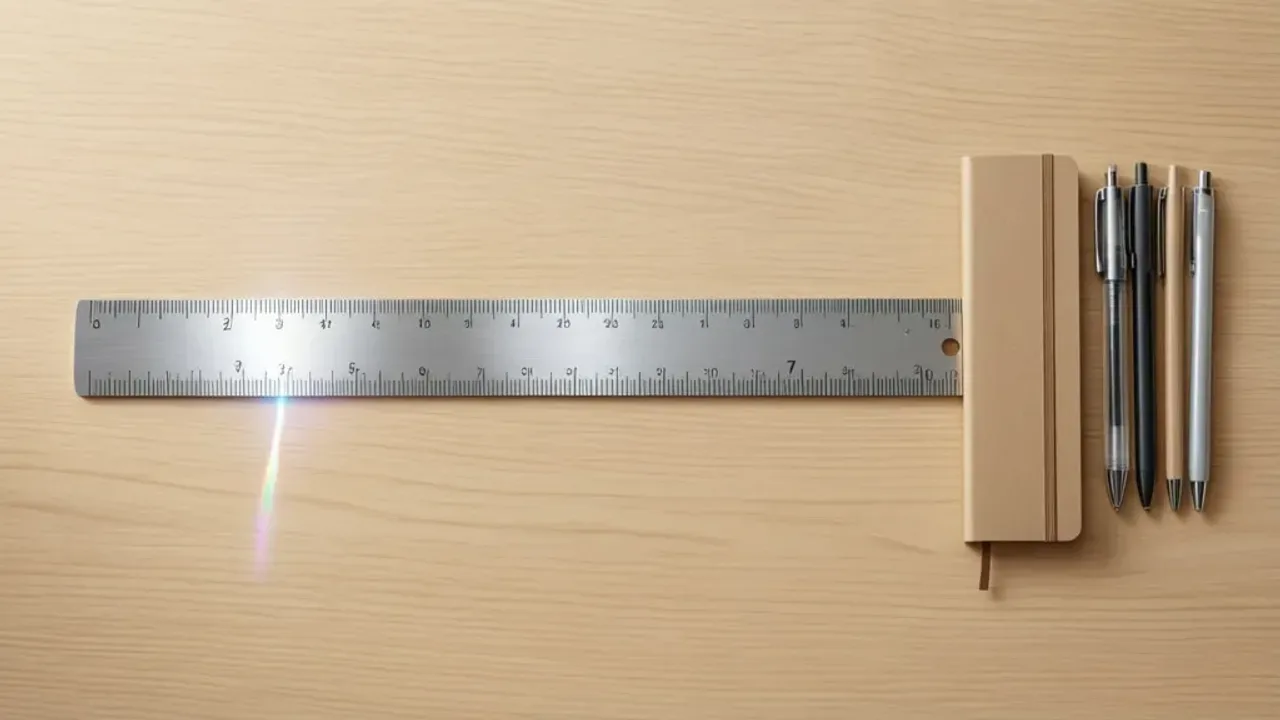 AI-generated image
Key Takeaways:
- A length of 7 inches is precisely 17.78 centimeters.
- You can estimate this length by using a standard hand span.
- Common household items often serve as reliable physical references.
- Converting between imperial and metric units allows for quick size assessments.
Visualizing 7 Inches
Visualizing specific lengths can be challenging without a reference tool. Fortunately, 7 inches is a common dimension in manufacturing and daily life. When a person asks how long is 7 inches, they often seek a tangible way to perceive this distance. It helps to have a mental shortcut for quick estimation. Use a ruler for precision when accuracy is required.
In many cases, the best way to grasp a measurement is to relate it to familiar objects. A standard sheet of paper, for instance, is 8.5 inches wide, meaning 7 inches is just slightly shorter than the width of a typical document. This relative scale makes it easier to visualize without needing a tape measure. It is a very practical reference point.
- Use a standard ruler or tape measure for precise work.
- Compare the distance to common objects like pens or mobile devices.
- Observe the span of an open hand as a rough guide.
| Unit | Equivalent for 7 Inches |
|---|---|
| Centimeters | 17.78 cm |
| Millimeters | 177.8 mm |
| Feet | 0.583 ft |
| Meters | 0.1778 m |
Common Objects and Comparisons
Many items in a home or office environment fall near the 7-inch mark. Recognizing these objects helps build a mental reference for the scale of this distance. When considering how long is 7 inches in a practical sense, one can look at common items such as tablet screens, kitchen tools, or standard stationery. These provide a reliable baseline. It is very simple to verify this by checking the diagonal or side length of small electronics.
Electronic devices are frequently measured in inches. A "7-inch tablet" typically refers to the length of its screen measured diagonally. This is a primary way consumers interact with this specific measurement in the modern market. If you have a small tablet or a large smartphone, there is a high probability that you are already holding something that aligns with this dimension. It is a common standard in the tech industry.
- Check the length of standard office supplies like specific notebook sizes.
- Measure common kitchen tools against a known 7-inch reference.
- Use the width of a hand to quickly gauge if an item is approximately 7 inches long.
- Compare against the screen size of a small tablet or e-reader.
The Importance of Accurate Measurement
Precision is vital in many fields, including woodworking, tailoring, and engineering. Even a slight deviation from 7 inches can cause significant issues in a project. When you are measuring, always ensure your tool is perfectly flat against the surface. Avoid parallax errors by looking directly down at the markings. This is a fundamental technique for any professional or hobbyist.
Always verify your tools before starting a project. Over time, metal rulers can be scratched, and plastic tapes can stretch. A simple check against a known standard is good practice. If you are working on a project where 17.78 centimeters is the target, do not guess. Measure twice and cut once. This classic advice remains the most effective way to prevent wasted materials.
Frequently Asked Questions
How big is 7 inches compared to a human hand?
For many, 7 inches is roughly the distance spanned by an open hand from the tip of the thumb to the tip of the pinky. This serves as a useful reference when a ruler is unavailable, though it may vary slightly based on individual hand size.
What common objects measure 7 inches?
Various items such as certain electronic tablets, small kitchen utensils, or standard school supplies often measure close to 7 inches. Identifying these familiar objects makes visualization easy and quick.
How can I convert 7 inches to centimeters accurately?
To convert inches to centimeters, multiply the number of inches by 2.54. Following this calculation, 7 inches results in exactly 17.78 centimeters.
Is 7 inches the same as 177.8 millimeters?
Yes, 7 inches is exactly 177.8 millimeters. This conversion is consistent across all standard measurement systems used in the United States and global engineering standards.
Why is 7 inches a common benchmark?
This length is a frequent point of comparison because it represents a manageable scale for many portable tools and everyday objects. It provides a clear dimension that is easy to identify in both personal and professional settings.
Can I use a smartphone to measure 7 inches?
Many modern smartphones have screen sizes or physical dimensions that can be used for estimation. If you know your device's exact width, you can use it as a makeshift ruler for quick, non-critical measurements.
Tips for Better Estimation
Developing a "spatial awareness" for measurements like 7 inches takes practice. Try to guess the size of an object before measuring it. After enough repetitions, your internal scale will become much more accurate. This skill is highly beneficial in daily life, especially when shopping for furniture or home decor. You will find it easier to judge sizes without constant reference to a tape measure.
Consider keeping a small ruler in your wallet or pocket. It is a simple tool that removes all guesswork. If you work in a trade, this is standard equipment. Even if you are not a professional, having a reliable way to check dimensions is never a bad idea. It keeps your projects on track and ensures that everything fits exactly as intended.
Seven inches is equivalent to 17.78 centimeters. Always use a ruler for precision or your hand span for a quick estimate.
Share: