A distance of 150 feet is equivalent to 50 yards, 1,800 inches, or approximately 45.72 meters. Understanding how big is 150 feet requires a clear grasp of standard imperial and metric conversions to visualize the scale accurately in various real-world scenarios. Whether you are planning a construction project, measuring athletic fields, or simply trying to conceptualize space, this measurement serves as a vital benchmark for distance and length.
MeasurementsOctober 8, 2026
How Big Is 150 Feet? 50 Yards and 45.72 Meters Explained
 AI-generated image
Key Takeaways:
- 150 feet is exactly 50 yards or 1,800 inches.
- The metric equivalent is 45.72 meters.
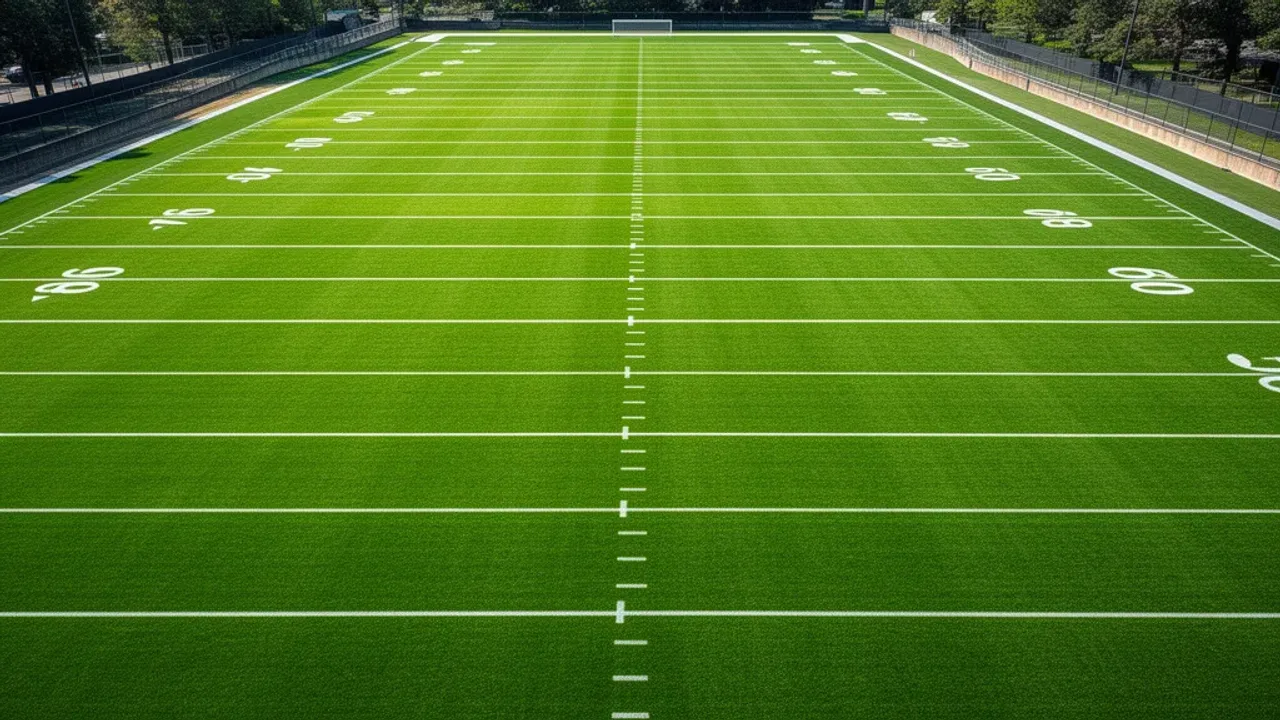
- This distance represents half the length of a standard 100-yard football field.
- Standard conversion factors ensure accuracy across all measurement systems.
Visualizing 150 Feet
Visualizing a span of 150 feet often requires comparing it to familiar structures. Because this measurement is exactly 50 yards, it serves as a common benchmark in sports and land measurement. When someone asks how big is 150 feet, relating it to a football field provides immediate perspective to the observer. It is simple to grasp.
When you look at this distance, think of it as a significant length that bridges the gap between small-scale objects and large-scale infrastructure. It is long enough to require a clear line of sight, yet short enough to be traversed quickly on foot. Many people find that visualizing it as half of a standard athletic playing area is the most effective way to internalize the scale.
- It is 1/3 of a 150-yard distance.
- It equals 1,800 inches.
- It is precisely 45.72 meters long.
- It covers 0.028 miles.
The Conversion Math
Mathematics provides the foundation for understanding distance. To convert feet into other units, we rely on established international standards. One foot is defined as 12 inches. By multiplying 150 by 12, we arrive at the total of 1,800 inches. This level of precision is critical in engineering, where even small errors can impact the integrity of a project.
When transitioning to the metric system, the conversion factor is 0.3048. Multiplying 150 feet by 0.3048 results in 45.72 meters. This conversion is used globally, ensuring that measurements remain consistent regardless of the region. Consistency matters.
| Measurement Unit | Equivalent Value |
|---|---|
| Yards | 50 yards |
| Inches | 1,800 inches |
| Meters | 45.72 meters |
| Centimeters | 4,572 centimeters |
| Miles | 0.0284 miles |
Common Objects and Structures
In practical applications, 150 feet is a frequent dimension for various purposes. To maintain accuracy when working with this length, consider the following steps:
- Verify your measurement tools for calibration before starting.
- Use a conversion factor of 0.3048 when switching to meters.
- Confirm that you are measuring in a straight line to avoid discrepancies.
- Always double-check your starting point for maximum accuracy.
Whether in construction or athletic planning, knowing how big is 150 feet allows for precise spatial planning. By utilizing the standard conversion factor, any user can accurately translate these imperial measurements into the metric system. It is very helpful for contractors and architects alike.
Engineering and Construction Contexts
In the world of construction, 150 feet represents a substantial span. It is often the length of property setbacks, the height of mid-rise buildings, or the distance required for fire safety access routes. When developers plan these areas, they must account for the physical space that 150 feet occupies.
Safety regulations often dictate that certain equipment or emergency exits must be within a specific distance of an entrance. If a building code requires an exit every 150 feet, builders must adhere to this strictly. Understanding the scale of this distance ensures that safety protocols are met without wasting valuable square footage. It keeps people safe.
Athletic and Recreational Uses
Sports fields are perhaps the most common way laypeople encounter this distance. Since a standard football field is 100 yards, or 300 feet, 150 feet is exactly the midpoint. This allows coaches and players to segment the field during training drills. A 50-yard sprint or a 50-yard pass is a common metric used to evaluate player performance.
Beyond football, 150 feet is a common length for swimming pool lanes or the distance between bases in certain recreational diamond sports. Because it is a round number in the imperial system, it is frequently chosen for the layout of public parks and recreational facilities. It is a functional and logical choice.
Frequently Asked Questions
How many yards are in 150 feet?
There are exactly 50 yards in 150 feet. Since a yard is 3 feet, dividing the total feet by 3 yields this exact figure.
What is 150 feet in meters?
A length of 150 feet is equal to 45.72 meters. This uses the standard where one foot equals 0.3048 meters.
How does 150 feet compare to a football field?
A standard American football field is 100 yards long. Consequently, 150 feet represents exactly half the length of the primary playing field.
Is 150 feet common for buildings?
Yes. It is a frequent height for medium-sized structures. It provides a significant scale for construction.
What is the total in inches?
There are 1,800 inches in 150 feet. This is determined by multiplying 150 by 12.
Why is this measurement important?
It acts as a standard benchmark for construction, sports, and safety regulations. Precision here prevents errors in project design.
Final Considerations for Accuracy
When measuring 150 feet, environmental factors can play a role. If you are using a long tape measure, tension and temperature can slightly alter the reading. Always pull the tape taut to ensure you are capturing the true distance. Precision is a habit.
150 feet is equivalent to 50 yards or 45.72 meters. Always use the 0.3048 conversion factor for precision in your professional and personal projects.
Share: