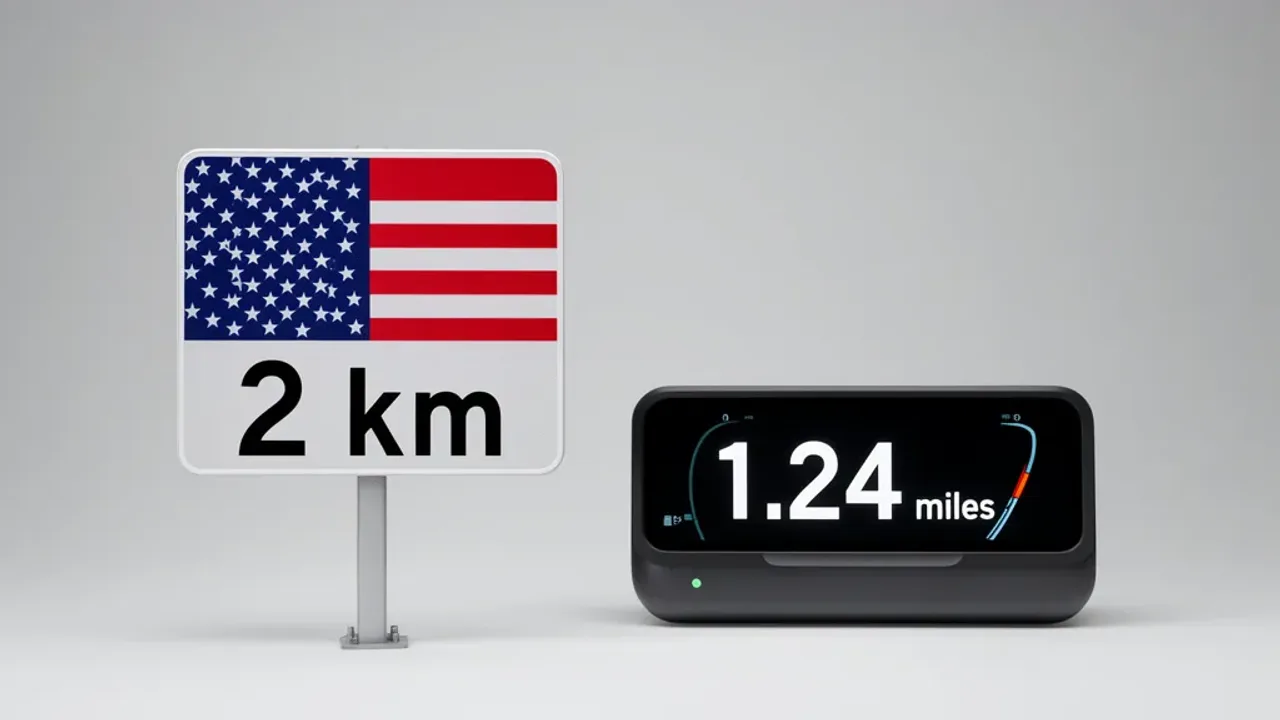
Two kilometers is equal to 1.24274 miles. When individuals search for 2 km to miles, they are typically looking for an accurate conversion factor to bridge the gap between the metric system and imperial measurements. Whether you are planning a route, setting athletic goals, or simply trying to understand distance in a different unit, knowing how to perform this calculation is essential for clarity.
ConvertersOctober 5, 2026
2 Kilometers to Miles: How to Convert 2 km to 1.24274 Miles
 AI-generated image
Key Takeaways:
- Two kilometers equals 1.24274 miles exactly.
- One mile is defined as 1,609.34 meters.
- Use the multiplier 0.62137 to convert kilometers.
- Digital tools handle this math automatically.
Conversion Formula and Methodology
To convert kilometers to miles, you must multiply the distance in kilometers by the conversion factor of approximately 0.621371. Because one mile is defined as 1,609.34 meters, this ratio remains consistent for all linear measurements. It is precise. Applying this calculation to 2 kilometers yields the standard value used for global mapping and navigation systems.
The metric system uses the kilometer as a base unit for long distances, while the imperial system relies on the mile. Understanding this relationship helps when you encounter road signs or fitness equipment that default to one system over the other. It is a fundamental skill for travelers and athletes alike.
Keep these factors in mind for the 2 km to miles conversion:
- Always use the 0.62137 multiplier for standard conversions.
- Ensure your input value is in kilometers before applying the formula.
- Rounding to two decimal places is generally sufficient for most everyday needs.
- Check your device settings if the numbers do not seem to align with your expectations.
| Kilometers | Miles |
|---|---|
| 1 km | 0.62137 miles |
| 2 km | 1.24274 miles |
| 3 km | 1.86411 miles |
| 4 km | 2.48548 miles |
| 5 km | 3.10686 miles |
Practical Applications
Understanding these units is essential for road markers or athletic activities. Follow these steps for accurate tracking when using the 2 km to miles calculation:
- Check your device settings to confirm your preferred unit of measure.
- Use the conversion factor if you are comparing results from different types of tracking software.
- Verify your final output if you are planning routes for long-distance travel across borders.
Consistency is vital. It aids accuracy in every scenario.
Frequently Asked Questions
How is the conversion factor determined?
The factor comes from the international agreement that defines one mile as 1,609.344 meters. Dividing this figure by 1,000 establishes the standard relationship between the two units.
Is the conversion the same for all distances?
Yes, the ratio is constant. Whether you are measuring 2 kilometers or 200 kilometers, the same mathematical factor is applied to ensure accuracy across the board.
Why do some devices show slightly different results?
Variations in results typically occur due to rounding preferences rather than a change in the conversion math. Most digital tools round to two or three decimal places to provide a clear and readable measurement for the user.
Can I use this for nautical miles?
No, this conversion applies specifically to land miles. Nautical miles use a different standard of measurement based on the Earth's circumference.
Where is this distance commonly used?
It appears frequently in short-distance athletic training. It is a common benchmark for walking, jogging, and cycling programs.
To convert kilometers to miles, simply multiply by 0.62137. This constant factor ensures accurate results whenever you switch measurement systems.
Share: